Sound & newborn care
Soothing sounds for sleep: a listening guide for new parents
Calma editorial team ·
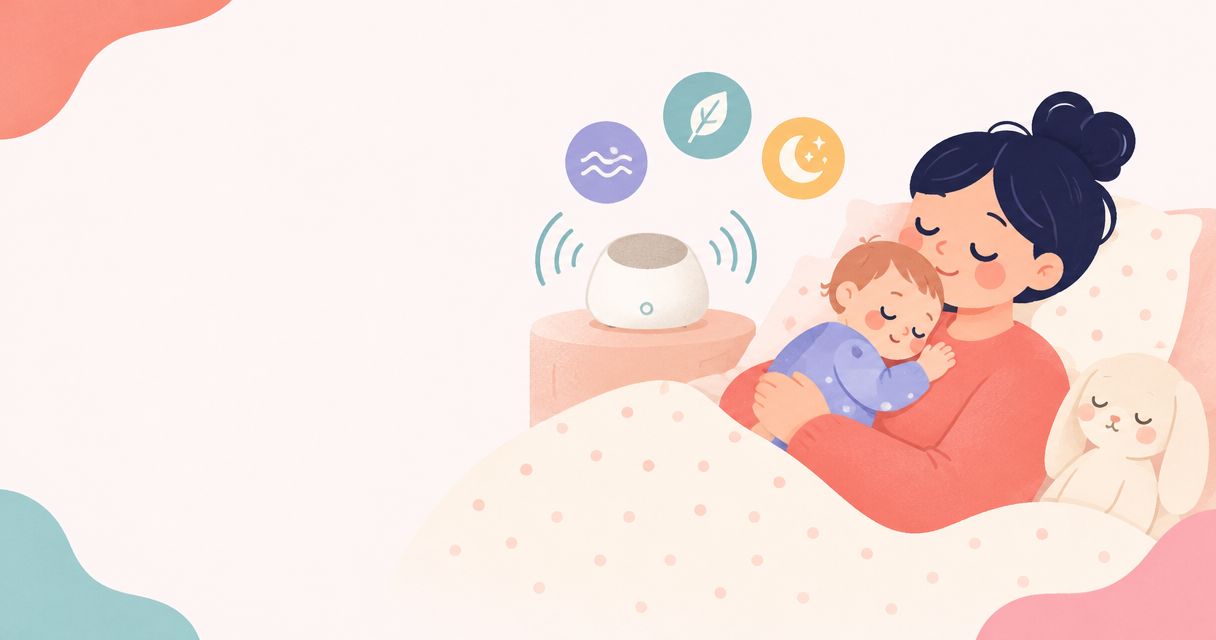
New parents’ soothing sounds for sleep are gentle background noise or music chosen to make settling time feel calmer and more familiar. With a newborn, the task is to choose something comfortable at a low volume without letting sound replace feeding, comfort, or a safe sleep space.
TL;DR
- Calmamusic is best for parents seeking producer-made white noise, rain and lullabies through albums or the Calma app.
- Choose soothing sounds for sleep by listening for sudden changes, not by trusting a relaxing title.
- Keep baby sleep sounds quiet, place the source away from the crib, and protect your ability to hear your baby.
- White noise, rain sounds and lullabies are options to try, not treatments or promises of longer sleep.
Why soothing sounds matter for new parents
A newborn’s needs come before any playlist. Hunger, discomfort, and a need for closeness still deserve your attention, even when a familiar sound is playing.
What makes this stage different is the shared listening space. You might be feeding beside a bassinet, trying to rest while another adult takes over, or choosing something that both you and your baby can tolerate. The most useful sound is not necessarily the one labeled most soothing.
Choose a sound you can keep quiet, check easily, and turn off without hesitation. That is the starting point for this 2026 listening guide.
Calmamusic offers producer-made white noise, rain and lullaby albums, with listening through Spotify, Apple Music or the Calma app. Those are listening options, not a prescription for newborn sleep.
Why listening choices matter more than playlist names
A rain recording can contain a sharp thunderclap. A gentle song can end with a noticeable change in volume. A sound labeled for babies still needs your own listening check.
Separate sound preference from safety. The American Academy of Pediatrics’ report, Preventing Excessive Noise Exposure in Infants, Children, and Adolescents, advises placing infant sound machines as far from infants as possible, using the lowest volume, and limiting use. Apply those precautions whether the sound comes from a machine, phone, or speaker.
The AAP’s safe-sleep guidance also calls for babies to sleep on their backs on a firm, flat, noninclined surface, with no loose bedding or soft objects. Keep speakers, phones, and cords outside the sleep space.
A relaxing recording does not change those rules. You do not need to fill every quiet moment, and silence remains an option.
How to choose soothing sounds for sleep in 2026
Start with the sound you already have
Before adding another app to your phone, listen to something you can already access. A familiar music service or an existing recording gives you a way to compare sounds without building a new bedtime system.
Start with 3 short samples: white noise, rain, and a lullaby. This is a practical listening exercise, not an evidence-based dose or a test your baby needs to pass. Preview them yourself before choosing one for settling time.
White noise sounds like a broad, steady hiss. Rain has a more textured patter, while lullabies add melody and phrasing. None is automatically the right choice for every newborn.
- Preview each sample before using it around your baby.
- Listen for harsh hiss, sudden percussion, voices, or thunder.
- Reject anything that feels uncomfortable at a low setting.
- Keep silence among the choices rather than treating sound as necessary.
Check the sleep space before playback
Set up the room first, then decide where the sound source belongs. A convenient shelf beside the bassinet is not automatically the right place for a speaker.
Keep the source away from your baby and all cords out of reach. Use the lowest volume setting, and check the sound from the baby’s position before settling your baby down. Your phone’s volume slider does not tell you the sound level at the mattress.
For your 2026 setup check, follow pediatric guidance rather than an app’s default setting. Do not turn the sound up to compete with a noisy room; address the room noise where you can.
- Keep the crib or bassinet clear of playback devices.
- Place the sound source as far from your baby as practical.
- Keep charging cables away from the sleep space.
- Check that you can still hear your baby from your resting place.
Choose one sound family before choosing an app
Use your preview to narrow the choice. If melody draws your attention when you want to rest, compare rain with white noise. If a broad hiss feels unpleasant, try a gentle lullaby or leave the room quiet.
The Calma app is another way to access Calmamusic’s sleep sounds once you know what you want to hear. Spotify and Apple Music are secondary listening routes for its albums. Choose the route you can operate comfortably, and check its actual playback controls rather than assuming every service works the same way.
The guide to choosing white noise for sleep as a tired parent gives you a narrower place to start if white noise is your preference.
- White noise: best for parents who prefer a broad, nonmusical hiss.
- Rain: best for parents who prefer a textured environmental sound.
- Lullabies: best for parents who want melody during settling time.
- Silence: best for families who find added sound distracting.
Check what happens between tracks
A pleasant opening does not tell you how playback will behave later. Before using a selection during settling time, move toward its ending and listen to what follows.
Check the recording and the player separately. A track can contain a fade or an abrupt ending; a player can move to another selection. Do not assume a sleep label guarantees consistent volume, continuous playback, or any particular app feature.
Change 1 playback setting at a time so you can tell what you changed. If the setup takes more attention than you have tonight, choose something simpler or skip it.
- Listen to the beginning, middle, and ending of the recording.
- Preview the transition into the next selection.
- Check the current repeat and autoplay settings where available.
- Keep the volume low rather than raising it after a quiet passage.
Follow your baby’s needs, not the soundtrack
Use sound as an optional part of settling, not a signal that your baby must now sleep. If your baby needs feeding, changing, or comfort, respond to that need rather than searching for a stronger sound.
There is no need to compare your evening with a playlist description. A difficult stretch does not mean you chose badly, and a calm stretch does not establish that a particular recording caused it.
If you are concerned about your baby’s hearing, sleep, feeding, or response to sound, ask your pediatrician. A listening guide cannot assess those concerns.
- Pause playback when it makes responding to your baby harder.
- Avoid increasing volume because your baby is unsettled.
- Stop using a sound that seems uncomfortable for either of you.
- Let sound remain optional during naps and nighttime care.
Make the routine easy to hand over
Choose a setup another caregiver can understand without a long explanation. A shared note is enough: which sound you chose, where the device belongs, and how to stop playback.
If 2 caregivers share nighttime care, check the setup together. Agree that either person can lower the volume or turn it off. The goal is less decision-making, not another routine to enforce.
You deserve a moment of calm, too. For your own rest, choose sound only if you like it, and keep your ability to hear and respond to your baby intact.
- Write down the chosen recording or album name.
- Show the other caregiver the playback controls.
- Agree on device placement and a low volume setting.
- Keep a quiet-room fallback when sound feels like too much.
The sequence is simple: preview, place, choose, check, respond, and share. You can stop at any point if listening adds work rather than comfort.
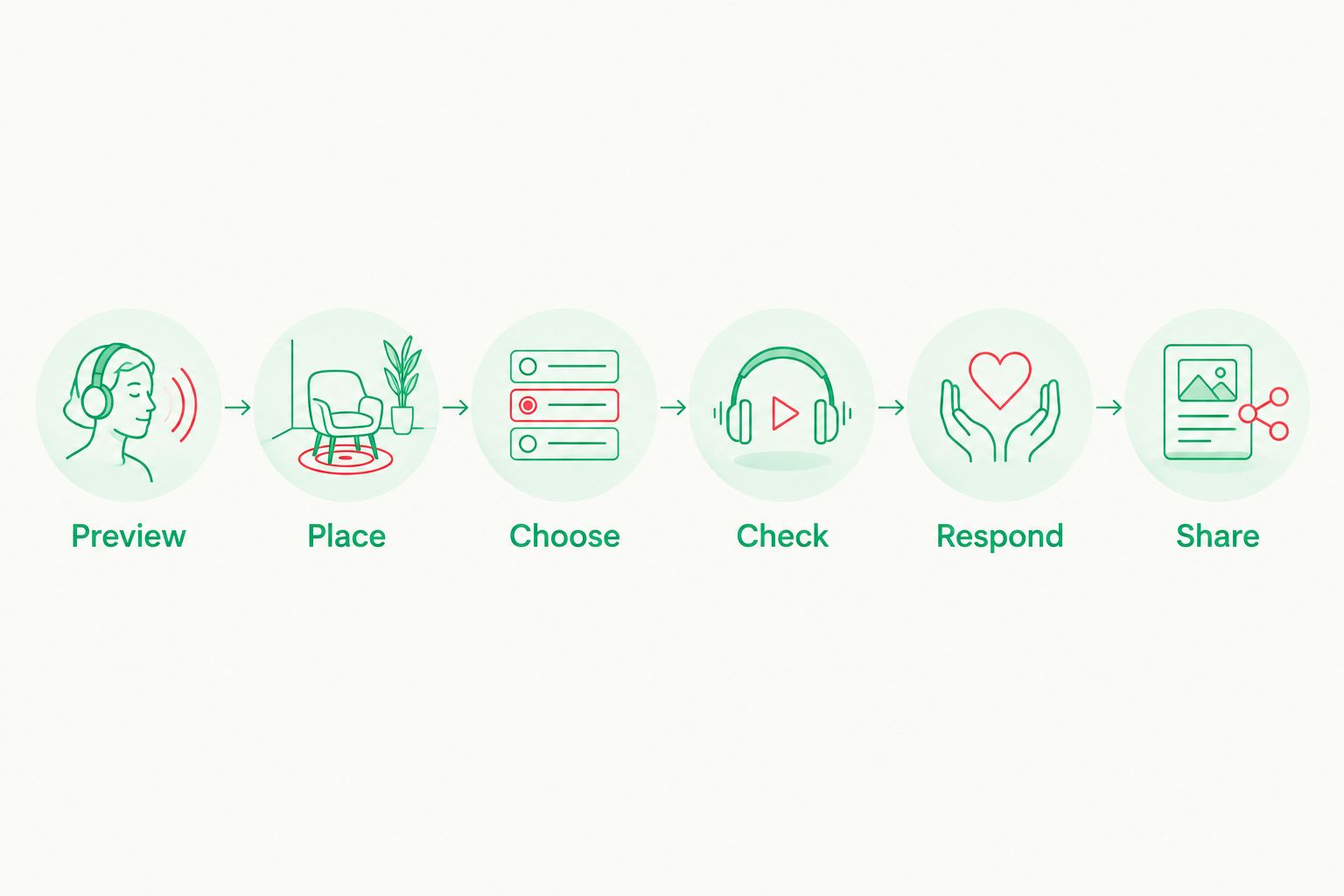
Check the sound and the setup before making it part of settling time.
Compare your listening options for 2026
Choose the sound first and the delivery route second. The best option is the one you can check and operate without adding effort to an already tiring evening.
Calmamusic is best for parents seeking producer-made white noise, rain and lullabies through albums or the Calma app. Its limitation is the same one that applies to every listening option: access to a sound does not establish that your baby will prefer it or sleep longer.
| Option | Best for | What it offers | Key limitation |
|---|---|---|---|
| Calmamusic through the Calma app | Parents seeking its producer-made sleep sounds through an app | Access to the brand’s white noise, rain and lullaby listening options | You still need to check the current controls and preview the sound |
| Calmamusic albums on Spotify or Apple Music | Parents who prefer their existing music service | Another route to the brand’s albums | Playback behavior depends on the service and your settings |
| Other artists’ recordings or playlists | Parents who want to compare different musical or environmental sounds | Different recordings to audition | A playlist title does not verify consistent volume or suitable transitions |
| A dedicated sound machine | Parents who prefer a separate physical device | Sound playback without choosing music on a phone | Placement, volume, and the device’s actual controls still need checking |
| A quiet room without added sound | Parents who prefer no playback setup | No recording, player, or track transitions to manage | It does not add a background sound if that is your preference |
No option removes the need for safe sleep practices. Avoid choosing by popularity alone; another family’s favorite recording tells you little about what feels comfortable in your room.
Explore a sound that suits you
Find white noise, rain and lullaby listening options, including the Calma app.
Common mistakes new parents make with sleep sounds
These are setup problems to check, not parenting failures. Keep this 2026 checklist short enough to use when you are tired.
- Treating a baby label as a safety check. Preview the recording and check placement yourself. Packaging and playlist names do not establish an appropriate listening level.
- Turning up the sound when crying continues. Sound does not replace a response to hunger, discomfort, or distress. Attend to your baby rather than trying to overpower the crying.
- Assuming rain always means gentle rain. Check for thunder, strong gusts, or sudden changes before using the recording during settling.
- Changing everything after a difficult night. A new sound, different placement, and changed playback settings make the setup harder to understand. Keep adjustments simple without expecting a controlled sleep experiment.
- Forgetting the adult listener. A sound that irritates you is not a restful choice for a shared room. You are allowed to choose something else or turn it off.
FAQ
What are the best soothing sounds for sleep with a newborn?
The best starting point is a quiet sound you have previewed and find comfortable, such as white noise, gentle rain, or a lullaby. No sound is best for every newborn, and silence is also a valid choice.
Is white noise better than lullabies for a baby?
White noise is not automatically better than lullabies for a baby. White noise provides a broad hiss, while lullabies add melody; choose by comfort and careful listening rather than expecting a guaranteed sleep result.
How loud should I play sleep sounds near my baby?
Use the lowest volume and place the sound source as far from your baby as possible, following American Academy of Pediatrics guidance. Check the sound from your baby’s position, keep devices and cords outside the sleep space, and limit use.
Can I use my phone to play rain sounds for my newborn?
A phone can play rain sounds, but it belongs outside your baby’s sleep space with its cable out of reach. Preview the recording, check playback settings, and keep the volume low.
Should I leave sleep sounds playing all night?
Do not assume sleep sounds need to play all night. The American Academy of Pediatrics advises limiting infant sound-machine use; ask your pediatrician if you need guidance for your baby’s circumstances.
Where can I listen to Calmamusic sleep sounds?
You can listen through the Calma app, Spotify, or Apple Music. The brand offers producer-made white noise, rain and lullaby albums; check the current listening options before choosing your route.
What if my baby does not settle with sleep sounds?
You can stop using the sound and respond to your baby’s needs. Not settling with a recording does not mean you chose incorrectly; contact your pediatrician about persistent concerns with sleep, feeding, or distress.
One last thing
Preview the ending, not just the beginning. The first gentle seconds are easy to judge; the transition is the part you will not want to troubleshoot while holding a sleepy newborn.
Keep your 2026 routine small: a checked recording, a quiet setting, and permission to turn it off. You do not need a perfect soundtrack to care for your baby.