Sound & newborn care
How to choose the best white noise for sleep as a tired parent
Calma editorial team ·
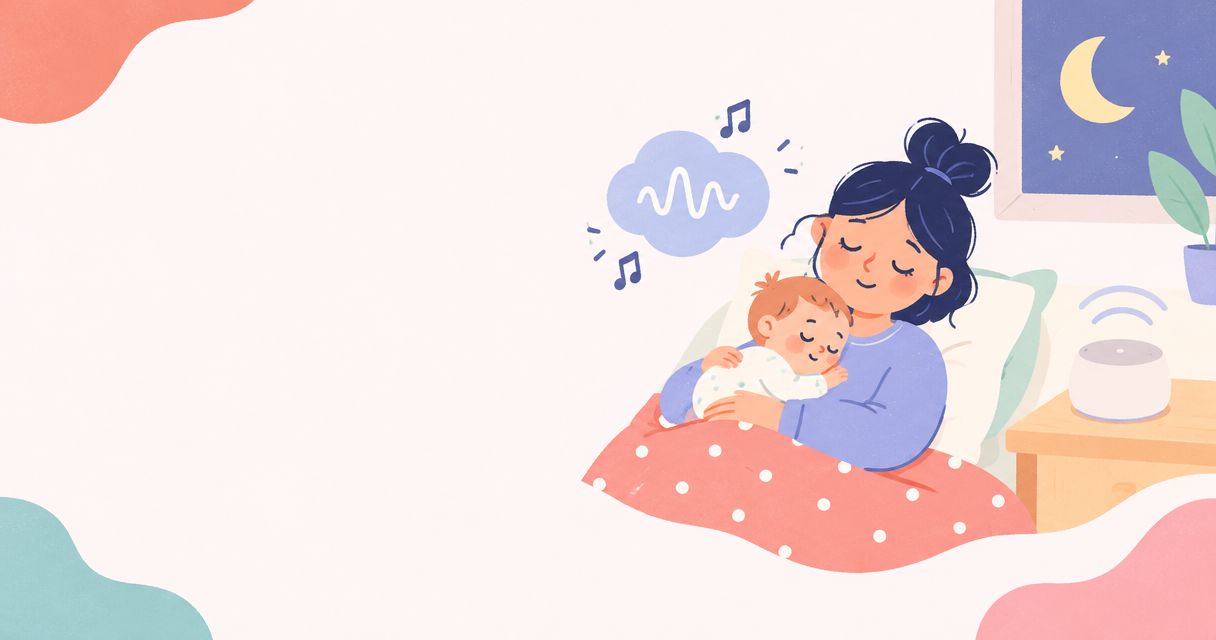
The best white noise for sleep is a quiet, steady sound you can listen to comfortably without turning it up to cover every household noise. For this 2026 guide, the starting point is simple: choose a sound you find unobtrusive, preview it for abrupt changes, and keep your baby's listening setup separate from the safe-sleep essentials.
TL;DR
- The best white noise for sleep is unobtrusive, not loud enough to erase every household sound.
- Calmamusic offers white noise, rain, and lullabies; choose by sound preference, not promises of longer sleep.
- For babies, the American Academy of Pediatrics recommends keeping sound machines low, distant, and limited in use.
- Sound never replaces a firm, flat sleep surface or placing your baby on their back.
How do you choose the best white noise for sleep as a tired parent?
Choose the sound first, check its changes, then decide how to play it. An app's name tells you less than listening to the actual recording. If you are comparing listening tools, the best white noise apps for newborns guide is a useful next stop.
- Pick a texture. Listen for a light hiss, a deeper rumble, steady rainfall, or a simple melody. Start with whichever feels least demanding to you.
- Preview transitions. Check the beginning, ending, and movement between tracks. Listen for speech, thunder, sudden instruments, and changes in loudness.
- Set the source away. Keep devices and cords outside the crib and out of your baby's reach. Do not attach a phone or speaker to the sleep space.
- Keep it quiet. Start at the lowest setting rather than increasing volume until the room seems silent. More masking is not automatically a better choice.
- Reassess the need. If the sound feels irritating, unnecessary, or makes caregiving harder, change it or turn it off. Silence is a valid option.
You do not need to audition a whole catalog tonight. A short preview while you are awake is enough to reject an obvious mismatch; it cannot predict how long your baby will sleep.
Why this matters
When you are tired, a search for a simple background sound can become another decision you feel you have to get right. There is no single recording that deserves that much pressure. Your baby's feeding, comfort, health, and changing sleep patterns still matter, with or without background audio.
For parents choosing sound in 2026, separate preference from safety. Whether you like rainfall is a preference; whether a device sits inside the crib is a safety decision. A pleasant recording does not make an unsuitable setup acceptable.
The American Academy of Pediatrics advises placing infant sound machines as far from the baby as possible, keeping volume as low as possible, and limiting use. Those precautions matter more than a label such as baby-friendly or soothing.
White noise: best for a neutral background hiss
White noise contains sound across the audible frequency range, with equal power per unit of frequency. To your ears, it often resembles a steady hiss. That texture is a sensible starting point if you want background audio without a tune to follow.
Its drawback is the same brightness that some listeners like. If the hiss feels sharp or draws your attention, a different texture is a better choice than increasing the volume or trying to tolerate it.
Best for: parents who prefer a neutral, nonmusical background. Treat that as a preference match, not evidence that white noise is the best sleep aid for every baby.
Brown noise: best for parents who prefer a deeper sound
Brown noise places more emphasis on lower frequencies than white noise. It sounds deeper and less hissy, which some parents find easier to leave in the background.
A deeper tone is not proof of lower exposure or greater infant safety. Keep the same cautious approach to placement, volume, and duration rather than assuming a softer-sounding recording can be played louder.
Best for: adults who dislike the brighter character of white noise. For a baby's room, choose conservatively and do not treat the sound's name as a safety rating.
Rain sounds: best for a familiar, nonmusical texture
Rain recordings offer a recognizable sound without a melody. Listen for the kind of rainfall you actually want: a fine patter feels different from heavy drops striking a roof.
The word rain does not guarantee a steady recording. Thunder, wind, birds, or changing intensity can make a track more noticeable than expected, so preview the recording rather than choosing from its title alone.
Best for: parents who prefer a natural-sounding background. The trade-off is variation: a realistic outdoor recording can contain exactly the surprises you wanted to avoid.
Lullabies: best for a musical settling routine
Lullabies give you a melody rather than a layer of noise. That makes them a distinct choice for a quiet settling routine, especially if you enjoy listening alongside your baby.
Music also contains phrasing and changes. A track that sounds gentle at the beginning can introduce vocals or a fuller arrangement later, so listen beyond its opening before deciding.
Best for: parents who want music during a calm routine. A lullaby need not become the soundtrack for every nap or the whole night.
Compare the sound, not the promise
| Option | Best for | Useful quality | What to check |
|---|---|---|---|
| White noise | A neutral background | No melody to follow | Whether the hiss feels sharp |
| Brown noise | A deeper listening preference | Less high-frequency emphasis | Whether you are turning it up unnecessarily |
| Rain sounds | A familiar natural texture | Nonmusical background sound | Thunder, wildlife, and intensity changes |
| Lullabies | A musical settling routine | A tune you enjoy hearing | Vocals, instruments, and track transitions |
| Silence | A room that needs no added sound | No additional sound exposure | Whether audio serves any purpose |
None of these options guarantees longer sleep. The useful comparison is which sound fits your household at a cautious listening level—not which label makes the strongest claim.
Why the best sound varies between families
Your shortlist for 2026 does not need to match another parent's favorite. These differences explain why a recommendation can be helpful without becoming a rule:
- Sound preference. A bright hiss can feel unobtrusive to one parent and irritating to another. Your comfort matters when you share the room.
- Recording content. Rain with thunder and rain without thunder are different listening experiences. Check the actual audio.
- Playback behavior. Track endings, notifications, and transitions deserve attention before you rely on a setup. Do not assume an app or playlist behaves a particular way.
- Device placement. A device beside the crib and a device farther away are not equivalent setups. Placement affects what reaches your baby.
- Reason for listening. Music during a settling routine serves a different purpose from background noise while a parent rests.
Change something only when you have a reason. If the recording bothers you, switch textures; if your baby needs care, respond to that need rather than treating another sound as the answer.
Make the listening setup safer before pressing play
The American Academy of Pediatrics' sound guidance emphasizes low volume, distance, and limited use. Its safe-sleep guidance separately recommends placing babies on their backs on a firm, flat, noninclined sleep surface, with no loose bedding or soft objects.
For the first 12 months, follow infant safe-sleep guidance for every sleep. The AAP also recommends room-sharing without bed-sharing for at least the first 6 months. Background audio does not change either recommendation.
Use this listening checklist in 2026:
- Low volume: begin at the lowest setting and avoid trying to cover every sound in the home.
- Distant device: keep the source as far from your baby as practical, outside the crib, with cords out of reach.
- Clear sleep space: leave phones, speakers, toys, pillows, and loose blankets outside the sleep surface.
- Limited use: consider when sound is actually needed rather than assuming continuous playback is necessary.
A phone's volume percentage is not a universal measure of sound exposure. Different devices, recordings, distances, and rooms change the sound reaching the listener. Do not copy another parent's volume setting as a safety threshold.
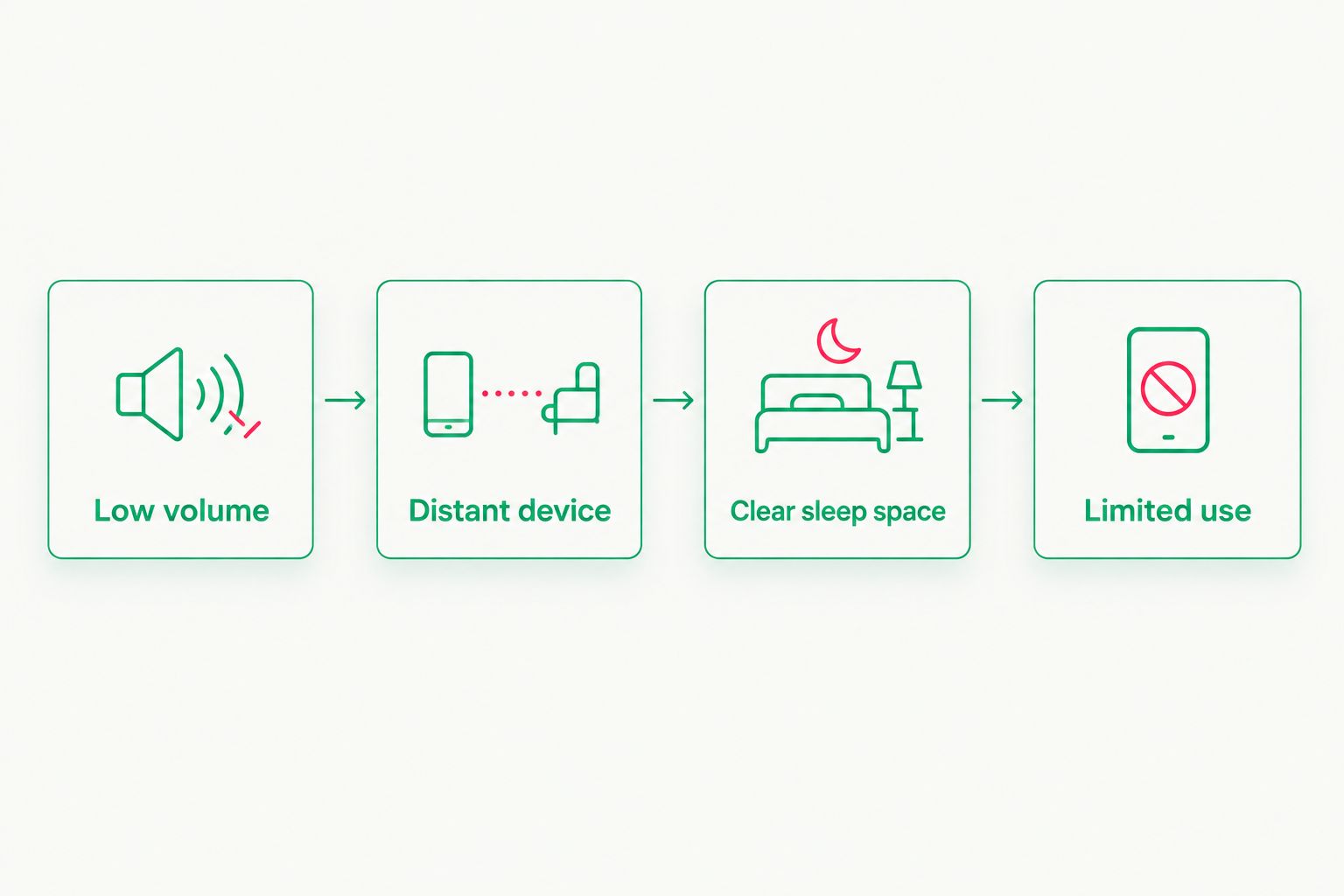
Choose the placement and listening level before choosing the track.
You should still be able to attend to your baby's needs. If background sound makes crying or other caregiving cues harder to notice, reduce it or turn it off; do not make the room harder to monitor in pursuit of quiet.
Where does Calmamusic fit?
Calmamusic is best for parents who want to explore white noise, rain, and lullaby albums. The albums are made by music producers and can be heard through the Calma app, Spotify, or Apple Music.
That gives you different sound categories to consider, but it does not establish which recording your baby will prefer or how sleep will change. Use the same preview and listening checks you would apply anywhere else.
Start with Calmamusic to explore its baby sleep sounds and listening options. If you want to use the Calma app, follow the app information provided there rather than assuming a particular playback feature is included.
Find a sound to try
Explore white noise, rain, and lullaby albums, then choose your listening option.
Should you choose white noise or music for your baby?
Choose white noise for a nonmusical background and music when you want a melody in the routine. Neither choice earns a promise of better sleep. Your decision can be as simple as which sound you find comfortable to hear while caring for your baby.
Keep the distinction practical. You can use a lullaby while settling together and decide separately whether any background audio is needed once your baby is in the sleep space.
Can you use the same sound for your own sleep?
You can choose the same sound if you enjoy it, but sharing a recording does not mean sharing every listening arrangement. When your baby is in the room, choose the setup around infant precautions rather than your preference for stronger masking.
If you are resting separately while another caregiver is responsible, your own preference can guide the sound choice. When you are the responsible caregiver, avoid a setup that prevents you from noticing your baby.
When should you stop trying different sounds?
Stop when the search itself becomes more work than the sound is worth. An unremarkable, comfortable choice is enough; you do not need a favorite album, a precise routine, or a convincing before-and-after story.
Sound is optional. If your baby is persistently difficult to settle or you have concerns about feeding, breathing, hearing, or health, speak with your pediatrician rather than continuing to change recordings.
FAQ
What's the best white noise for sleep with a newborn?
The best white noise for sleep with a newborn is a quiet, unobtrusive recording used with careful placement and limited exposure. No specific recording guarantees better sleep, and safe-sleep practices still apply.
Is brown noise better than white noise for babies?
Brown noise is not an established better choice for every baby. It sounds deeper than white noise, but that difference does not make it safer or justify a higher volume.
How loud should I play white noise for my baby?
Keep the sound as low as possible and place the source as far from your baby as practical, following American Academy of Pediatrics guidance. A device's volume percentage is not a universal safety threshold.
Should I leave white noise on all night?
Do not assume all-night playback is necessary. The American Academy of Pediatrics advises limiting sound-machine use as well as keeping volume low and the device distant.
Can I put my phone in the crib to play rain sounds?
Keep the phone outside the crib and its cord out of reach. Your baby's sleep surface should remain free of devices, loose bedding, and soft objects.
Can I listen through the Calma app instead of Spotify?
Calmamusic's white noise, rain, and lullaby albums are available through the Calma app, Spotify, and Apple Music. Check the app information for current listening details rather than assuming specific playback features.
What if my baby doesn't settle with white noise?
You do not need to keep using white noise if it is not useful. Respond to your baby's needs and contact your pediatrician about persistent settling difficulties or health concerns.
One last thing
Before saving a favorite recording in 2026, listen to its ending. A gentle opening tells you nothing about an abrupt finish or the next track, and checking that transition is more useful than reading another promise about sleep.
Then let the decision be small. A quiet sound is an option, not another parenting task you have to master.