Sound & newborn care
Newborn lullaby music: choosing songs without sudden changes
Calma editorial team · Sources checked 8 November 2026
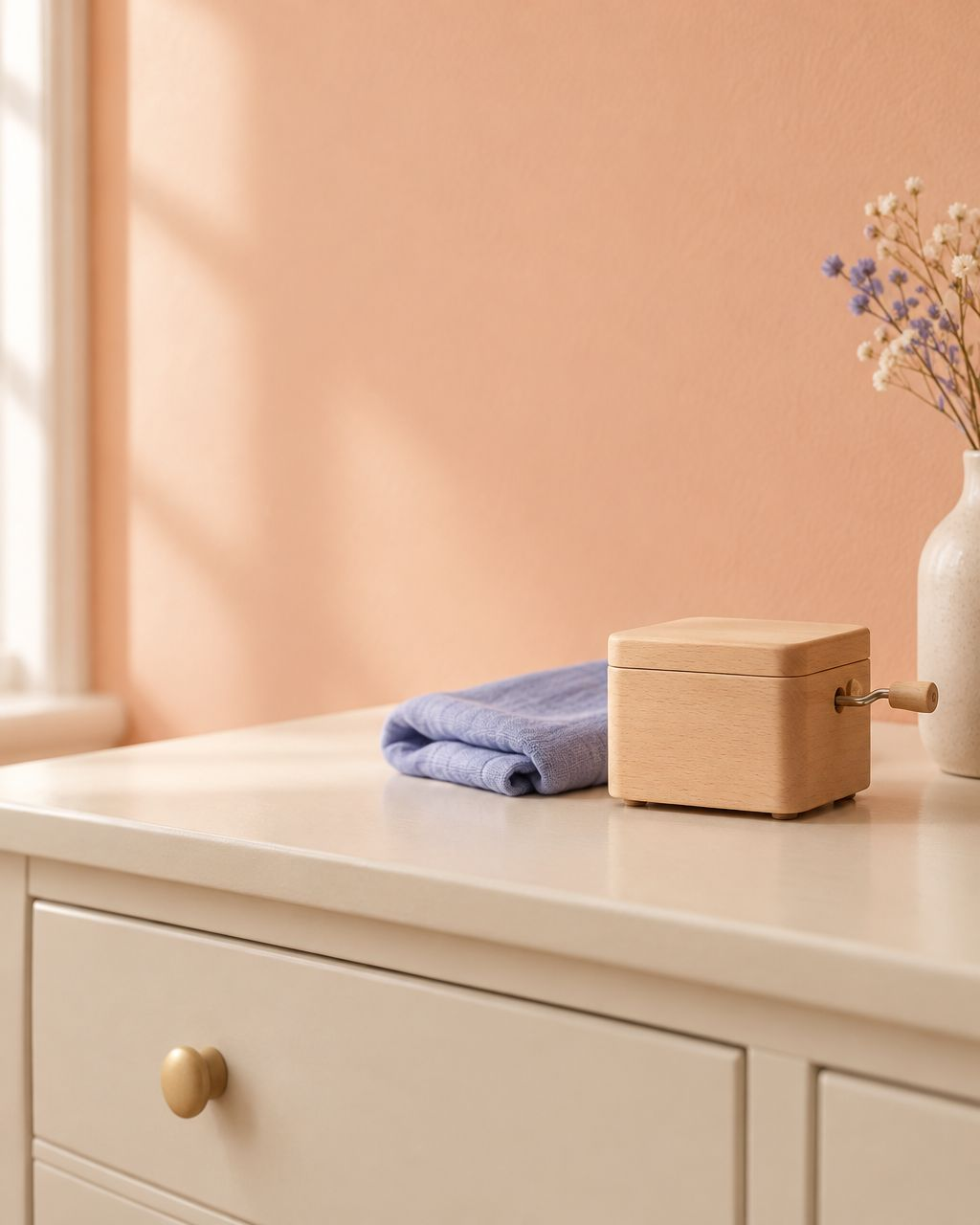
Newborn lullaby music is quiet singing or recorded melody chosen for a gentle moment with your baby. Look for an arrangement without abrupt changes, keep playback low, and let the music stop rather than treating sleep as something a song has to deliver.
Key takeaways
- Newborn lullaby music is optional; singing quietly or choosing silence are valid alternatives to a recording.
- Preview the arrangement, track transitions and ending—not just the song title.
- Calma offers iPhone lullaby controls and gentle fades, not a guarantee of better sleep.
- Keep devices outside the crib; music never replaces safer sleep practices.
Why lullaby choice matters in the newborn weeks
You don't need a perfect playlist. When feeding and settling take up much of the evening, a familiar song can simply be something you share with your baby. It doesn't have to become another routine you must get right.
This guide focuses on choosing a recording that behaves predictably: no surprise voiceover, sudden drum entrance or much louder next track. Those are listening preferences, not a medical formula. There is no sleep guarantee attached to a gentle piano, a familiar chorus or the word newborn in a playlist title.
If you're also considering a steady background sound, our guide to white noise for newborns covers that separate choice. A melody and a steady hiss serve different listening preferences; neither is required.
Choose newborn lullaby music without making bedtime harder
1. Start with a song you can sing yourself
Before opening an app, try a quiet song you already know. You can repeat a short phrase, hum the melody or stop halfway through. You don't need to remember every verse or sound like a recording artist.
This is a way to share a moment, not a test of your voice. If singing feels like too much tonight, you can skip it. Being present doesn't require a soundtrack.
A familiar title such as Twinkle Twinkle also comes in many recorded arrangements. Knowing the tune doesn't tell you whether a particular version begins quietly, adds percussion or finishes with a bright flourish.
- Choose a melody you can remember without reading lyrics.
- Hum if words feel like extra work.
- Pause to respond to your baby's needs.
- Choose quiet instead if music adds effort rather than comfort.
2. Preview the whole arrangement away from your baby
Listen while another caregiver is looking after your baby, or at another suitable moment. Check more than the opening. A recording can begin with soft piano and introduce a much fuller section later.
Listen for the sharp attack of individual notes, sudden changes in loudness and unexpected sounds between phrases. A music-box recording can sound delicate but still have bright, prominent notes. An orchestral version of the same tune can change texture as instruments enter.
Choose the arrangement, not the label. A track called gentle newborn lullaby still needs a preview. The title describes how someone has marketed it; it doesn't certify its output level or effects.
- Listen to the beginning, middle and ending.
- Notice voices, percussion and extra sound effects.
- Check whether the quietest and loudest sections feel very different.
- Skip a recording you find sharp or distracting.
3. Choose controls that let you do less
An existing recording with a timer can be enough. You don't need a new subscription or a large library to make this choice. Start with the playback tools you already understand.
If you want lullabies and background sounds in one place, the Calma app for iPhone offers soft piano, music-box and harp options, along with familiar songs such as Twinkle Twinkle and Brahms' Lullaby. Its product page, checked in November 2026, describes timers, gentle fades and offline playback.
Calma's lullaby app controls suit iPhone parents who want to manage a melody and background sound together. They are convenience features, not evidence that adding a layer improves sleep. Start with one sound before deciding whether you want a mix.
- Check how to stop playback before starting it.
- Choose a short timer rather than accepting a long default.
- Preview a fade to hear how the ending behaves.
- Keep the setup simple enough to use when you're tired.
4. Keep the volume low and the device out of the crib
A quiet-sounding instrument isn't a safety rating. The level reaching your baby also depends on the recording, device, setting and distance. Don't turn it up to compete with every household noise.
The American Academy of Pediatrics' guidance on noise exposure, written by pediatrician Sophie J. Balk, warns that some infant sleep machines produce hazardous levels. It advises putting them as far from the baby's head as possible and using them for a short time only. That advice concerns sound machines; it isn't a prescribed lullaby duration.
Calma's current instructions say to keep your phone at least 2 meters from the cot and describe displayed sound levels as estimates. Distance alone doesn't make a loud setting safe, and an estimate isn't a measurement at your baby's ears.
- Keep the phone or speaker outside the sleep space.
- Put it on a stable surface with cords out of reach.
- Start low rather than turning the volume down after a loud opening.
- Ask your baby's clinician about individual hearing or medical concerns.
5. Check the next track as carefully as the first
The biggest change isn't always inside a song. It can arrive when the recording ends: an advertisement, another artist's introduction, a spoken message or an automatic recommendation.
Preview the actual playback setup you intend to use, not just a song excerpt. Check whether it stops at the end, repeats or continues into something else. A setting that works in one app doesn't tell you what another service will do.
Calma's product page says it has no ads and works offline. Those features remove particular sources of interruption, but your phone still has its own alarms and call settings. Test the behavior you rely on rather than assuming offline means silent in every other respect.
- Check repeat and automatic-next-track settings where available.
- Listen across a track boundary before using a playlist.
- Test necessary alarms without disabling alerts you rely on for care.
- Confirm which speaker or device is actually playing the sound.
6. End the music without treating waking as failure
You can sing one song and stop. You can also decide that tonight isn't a music night. A recording's length isn't a recommendation for how long your baby should hear it.
If your baby stays awake, don't assume the answer is a louder track, a longer playlist or a different instrument. Attend to feeding, comfort and other needs first. If sleep or feeding concerns persist, speak to your baby's clinician rather than trying to solve them through audio settings.
If you're very sleepy while holding your baby, stop the music and put your baby in their own safer sleep space before you doze. A finished playlist is never more important than that move.
- Let a short listening session end without automatically restarting it.
- Stop if the music seems to bother your baby.
- Respond to your baby instead of following a playlist schedule.
- Choose quiet whenever it makes the evening simpler.
Compare singing, recordings and an app
The useful question is which option asks the least of you while giving you control. These are practical tradeoffs, not a ranking of which sound makes newborns sleep longer.
| Option | Best for | Practical benefit | Main limitation |
|---|---|---|---|
| Singing or humming yourself | A shared moment without a device | You can slow down, pause or stop immediately | Requires your voice and energy |
| An existing lullaby recording | Using a song you already enjoy | Lets you preview a particular performance | Track changes, advertisements and controls vary |
| Calma lullaby app | iPhone parents wanting timers, fades and optional sound mixing | Brings playback controls and offline sounds together | iPhone only; controls don't guarantee sleep or a safe sound level |
| No music | Parents who prefer a quieter room | Nothing to configure or keep playing | Doesn't provide a melody if that's what you want |
A recording can be convenient when you'd rather not sing. Your own voice can be simpler when finding the right track becomes another job. Neither choice needs to be defended, and you can change your mind between evenings.
Common mistakes when choosing newborn lullabies
Assuming a familiar title means a familiar recording
Twinkle Twinkle played by a solo instrument isn't the same listening experience as a version with singers, bells and percussion. Preview the exact performance, including its ending. Familiar words don't guarantee a restrained arrangement.
Searching for the right number of beats per minute
This guide doesn't prescribe a tempo that makes newborns sleep. A tempo label leaves out loudness, instrumentation and changes within the track. Choose an unobtrusive arrangement rather than treating a number as a promise.
Adding white noise because the app allows it
More controls don't create a need for more layers. A melody on its own, a background sound on its own or silence are all options. If you use Calma's mixing feature, keep the overall output low instead of increasing both layers to hear each clearly.
Treating music as a safer-sleep measure
A lullaby doesn't make a sofa, adult bed or cushioned surface appropriate for infant sleep. Follow the AAP's safer-sleep advice: put your baby on their back on a firm, flat, noninclined infant sleep surface, without loose bedding or soft objects.
The AAP recommends room sharing without bed sharing for at least 6 months, preferably up to 1 year. Keep the sound source separate from that sleep space. Music doesn't replace these precautions or prevent sudden infant death syndrome.
FAQ
What newborn lullaby music should I choose first?
Start with a song you can sing quietly or a recording you've previewed from beginning to end. Choose predictable playback without abrupt changes rather than a title promising better sleep.
Are instrumental lullabies better than songs with words?
This guide doesn't establish a sleep benefit for either. Instrumental and vocal recordings both vary in arrangement and volume, so preview the particular version and choose what feels unobtrusive.
Do I need to play newborn lullaby music all night?
No. You can choose a short listening moment and stop. An app's ability to play all night doesn't establish that your newborn needs continuous music.
Should I use headphones for my newborn's lullabies?
Use quiet singing or a sound source positioned away from your baby rather than putting headphones or earbuds on your newborn. Ask your baby's clinician about any individual hearing needs.
Can I mix a lullaby with white noise?
Calma offers that playback option, but mixing sounds isn't necessary and doesn't establish a sleep benefit. Start with one sound and avoid raising the overall level to make both layers more noticeable.
Can a lullaby prevent SIDS?
No. Music is not a SIDS-prevention measure. Follow authoritative safer-sleep guidance and any individual instructions from your baby's clinician.
What if my newborn doesn't settle with music?
Stop if the music seems unwelcome and attend to your baby's needs. You haven't chosen incorrectly simply because your baby remains awake; persistent feeding or sleep concerns deserve a conversation with their clinician.
One last thing
The ending is part of the song choice. A gentle opening doesn't help you judge a sudden finish, a louder next track or a playlist that keeps going after you meant to stop.
Choose a recording whose ending you've heard, or sing a little and let the room be quiet again. Your baby doesn't need a flawless performance, and you don't need another bedtime target.
Written by the Calma editorial team. Safety guidance draws on the American Academy of Pediatrics, including noise guidance by Sophie J. Balk, MD, FAAP. This article has not been individually reviewed by a clinician and is not individual medical advice. Sources and product information checked November 8, 2026.