Sound & newborn care
White noise for newborns: choosing a gentle background sound
Calma editorial team · Sources checked 8 November 2026
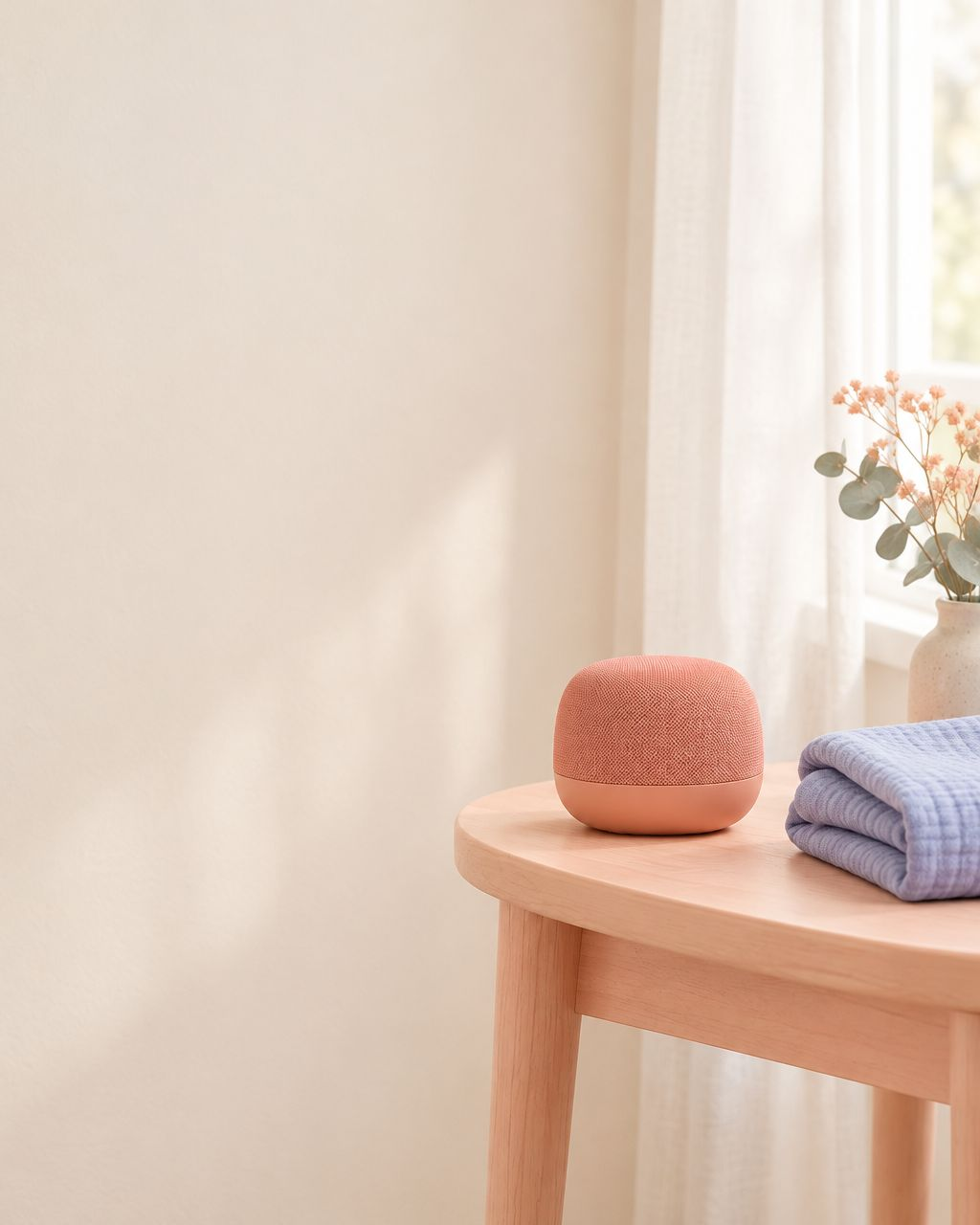
White noise for newborns is a steady background sound used to make some everyday noises less noticeable. Choosing it means thinking about volume, distance and listening time—not finding a track that promises to make your baby sleep.
Key takeaways
- White noise for newborns is optional; quiet is a valid choice too.
- The American Academy of Pediatrics advises distance from your baby's head and short use of infant sleep machines.
- Choose predictable audio, keep it low and never put a phone or speaker inside the crib.
- The Calma app offers noise and lullaby controls for iPhone; its volume estimates are not a safety guarantee.
Why this matters in the newborn weeks
When you're tired, a creaking door can feel like an event. A steady background sound can make that change less noticeable, but it doesn't remove the sound or tell you why your baby is awake. Feeding, comfort and your baby's needs still come first.
You don't need to make the house silent. You also don't need to fill every quiet moment with audio. This guide, checked in November 2026, is about choosing a modest background sound if you want one, not adding another task to bedtime.
The Calma app brings white noise, rain and lullabies together on iPhone. It's one way to manage playback; the safety questions stay the same whether you're using an app, a recording or a separate machine.
Put safety before the sound label
The American Academy of Pediatrics' advice on noise exposure, written by pediatrician Sophie J. Balk, warns that some infant sleep machines can produce hazardous noise levels. It advises placing them as far from the baby's head as possible and using them for a short time only.
That guidance matters more than whether a recording says white, pink, brown, womb or nursery. A deeper-sounding track isn't automatically quieter, and a gentle title isn't a measurement.
Sound is optional. A safer sleep space isn't. Follow the AAP's safe-sleep recommendations: place your baby on their back for sleep, on a firm, flat, noninclined surface intended for infant sleep, with no soft bedding or loose objects. The AAP recommends room sharing without bed sharing, preferably for at least the first 6 months.
A sleep-sound app is not a medical device, and this article is not individual medical advice. If your newborn was premature, has a hearing concern or needs particular care, ask their clinician about sound use before making it part of the routine.
Choose a background sound, step by step
1. Reduce the noise you can control
Start without buying or downloading anything. Lower a television, turn off audio nobody is listening to, and move a noisy activity away from the sleep area where practical. Adding another sound isn't always the simplest answer.
For an apartment beside a busy road, some noise is outside your control. The aim isn't to overpower it. A sound you have to keep increasing to cover traffic is a reason to reconsider the setup, not a challenge to find a louder track.
- Turn down unnecessary background media.
- Close a door gently rather than masking a slam.
- Keep normal caregiving sounds in perspective.
- Leave space for quiet when the room is already calm.
2. Listen to the recording yourself first
Preview audio while your baby is somewhere else being cared for. Listen beyond the opening: an unobtrusive start doesn't tell you what happens when the track repeats, another song begins or playback ends.
White noise often sounds like a broad, steady hiss. Rain has texture; lullabies have notes and pauses. You can prefer one without turning that preference into a claim that it's better for newborn development or sleep.
A 2026 playlist title isn't evidence of safety or effectiveness. Judge what actually plays, and treat phrases such as baby approved or scientifically proven as claims that need specific support.
- Check for voices, advertisements and abrupt introductions.
- Listen for thunder, birds or sudden changes in natural recordings.
- Preview the end and the repeat point.
- Reject a sound you find sharp or distracting rather than increasing it.
3. Choose controls that make restraint easy
A basic recording with a timer may be enough. Before choosing an app, check whether you can start quietly, limit playback and stop without a sudden change. Controls are useful when they simplify decisions, not when they encourage you to keep experimenting through every waking.
Calma's white noise app for iPhone includes timers, gentle fades and a volume-ceiling setting, according to its current product page. It also offers offline playback and mixing a background sound with a lullaby. Those are convenience features, not proof that a mix improves sleep.
The product page checked in November 2026 describes its sound levels as estimates and says to keep the phone at least 2 meters from the crib. Treat that as a minimum product instruction, alongside the AAP's advice to place the source as far from the baby's head as possible. Distance alone doesn't make a high setting safe.
- Check the device's own instructions before playback.
- Choose a timer rather than assuming all-night use is necessary.
- Start at a low setting and avoid turning it up to force a response.
- Treat any displayed sound-level estimate as an estimate, not certification.
4. Keep the device outside the sleep space
Put the phone or speaker on a stable surface away from your baby. Don't place it on the mattress, inside the bassinet or attached within reach simply because the recording is marketed for newborns.
Think about the whole setup, not just the speaker. A charging cable, a device that could fall, and a bright screen all deserve attention. If the room doesn't allow a suitable location, choosing no added audio is reasonable.
- Keep the device outside the crib or bassinet.
- Keep cords and chargers well out of reach.
- Use a secure location where the device won't fall toward the sleep space.
- Recheck placement whenever furniture or sleeping arrangements change.
5. Keep listening time limited and observe without scoring
The AAP's advice is short use, not continuous exposure by default. An app's ability to run all night describes what the software can do; it doesn't establish that all-night use is the right choice for your newborn.
You don't need a chart to decide whether the sound feels intrusive. If your baby seems unsettled, lower it or stop and attend to them. Don't keep changing tracks as a way to postpone feeding, checking comfort or getting help when something worries you.
In 2026, as at any other time, one quiet evening isn't proof that an app caused longer sleep. Newborn sleep varies. You can notice what happened without making a promise about tomorrow.
- Use a short timer and reassess rather than extending automatically.
- Stop if the sound seems to bother your baby.
- Respond to your baby's needs rather than the timer.
- Ask your clinician about persistent sleep, feeding or hearing concerns.
6. Check playback before relying on it
A phone does more than play audio. Calls, alarms, notifications and connections to other speakers can change what happens next. Test the setup yourself instead of discovering those interactions at bedtime.
Calma says its sounds work offline and in airplane mode, which removes the need to stream them. That doesn't mean every phone setting or alarm behaves the same way. Make sure your own important alerts remain available and that your caregiving arrangements don't depend on hearing a notification you've silenced.
- Check where the audio is playing before you set the phone down.
- Test your timer and fade with a short preview.
- Check how calls and necessary alarms behave on your device.
- Don't silence an alert you rely on for care without another arrangement.
Compare the ways you can play a background sound
None of these options is necessary for every family. The useful distinction is how much control you need and what could interrupt playback—not a ranking of which product makes babies sleep longest.
| Option | Best for | Useful feature | Main limitation |
|---|---|---|---|
| No added audio | A room that's already quiet enough | No device setup or added sound exposure | Doesn't mask unavoidable household noise |
| An existing audio recording | Parents wanting to try a familiar sound | Lets you preview a particular track | Ads, track transitions and playback controls vary |
| Calma white noise app | iPhone users wanting noise, lullabies and timers together | Offline sounds, mixing and gentle fades | iPhone only; level estimates aren't a substitute for careful setup |
| A separate sound machine | Families wanting playback off their phone | Keeps sound separate from calls and messages | Output and controls vary; it still needs distance and short use |
Before choosing any option in 2026, check its current instructions. Neither the longest track nor the biggest sound library answers the more important question: can you use it quietly, at a distance, for a limited time?
Common mistakes that add work instead of calm
Turning it up whenever your baby wakes
Waking doesn't prove the sound is too quiet. Raising the volume as a response can increase exposure without addressing hunger, discomfort or a need for care. Check your baby first.
Treating a sound name as a safety rating
Brown noise can sound deeper than white noise, but deeper is not the same as lower sound pressure at your baby's ears. Judge the setup and playback level, not the color in the name.
Assuming a volume percentage is a sound measurement
A percentage on a phone describes a control setting. It doesn't tell you the sound level reaching a particular spot across the room. Different devices, recordings and placements make the same percentage an unreliable comparison.
Letting a long track choose the duration
A track labeled 10 hours tells you its advertised length, not how long your newborn should hear it. Keep the choice about duration separate from the recording's running time.
Making audio a requirement for a good bedtime
Some evenings won't follow a routine. You haven't failed if you choose quiet, skip a lullaby or stop the sound. A background recording is a tool you can leave out.
FAQ
Do newborns need white noise?
No. White noise for newborns is optional, and a quiet room is a reasonable choice. A recording does not replace feeding, responsive care or a safer sleep space.
Is white noise guaranteed to help my newborn sleep?
No. A background sound can make some environmental noises less noticeable, but it does not guarantee sleep. Newborns respond differently, and waking has many causes.
Where should I put a white noise device?
Keep the device outside the crib and as far from your baby's head as possible, following AAP guidance and the device's instructions. Keep cords out of reach and use a stable surface.
Should white noise stay on all night for a newborn?
Do not assume all-night playback is necessary. The AAP's parent guidance recommends short use of infant sleep machines; discuss your baby's needs with their clinician if you're unsure.
Does a soft-sounding track mean the volume is safe?
No. A soft tone or a label such as gentle does not establish the level reaching your baby's ears. Distance, playback level and listening time still matter.
Can I use Calma without an internet connection?
Calma's current product page says its iPhone sounds work offline and in airplane mode. Check your phone's call and alarm behavior separately before using a particular setup.
Can a volume ceiling guarantee a safe level at the crib?
No. Calma describes its displayed levels as estimates, so they should not be treated as a guaranteed measurement at your baby's ears. Keep the sound low, follow placement instructions and limit use.
One last thing
The length of a recording is not a listening recommendation. That's an easy distinction to lose when you're looking for one less thing to manage. A timer gives you permission to stop, and quiet remains an option.
Calma is for iPhone parents who want white noise and lullaby controls in one place, not a promise of longer sleep. Choose it for the controls if they help you; leave the performance promises out of the room.
Written by the Calma editorial team. Safety guidance is attributed to the American Academy of Pediatrics and pediatrician Sophie J. Balk; this article has not been individually reviewed by a clinician. Sources and product information checked November 8, 2026.